
If a Customer Slips and Falls at Your Entrance, Is Your Business Liable?
- Jul 2
- 4 min read
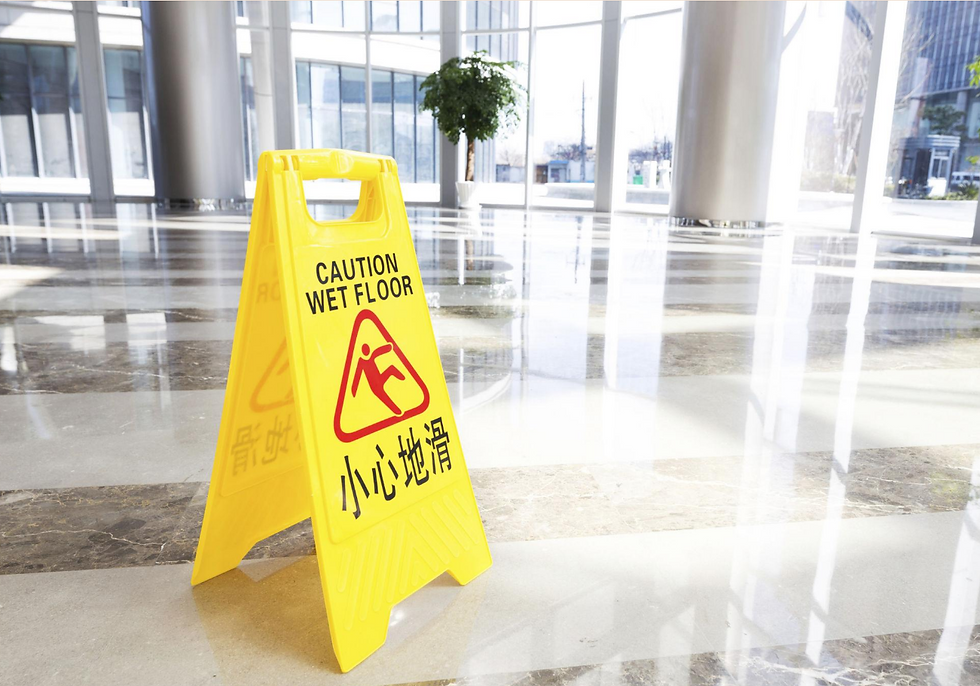
A Slip-and-Fall Accident Can Cost More Than You Think.
Many businesses assume that slippery floors on rainy days are simply unavoidable.
As a result, most facilities respond by increasing cleaning frequency, placing warning signs, or assigning staff to conduct regular inspections.
However, when a customer, visitor, or employee slips and falls, the consequences often extend far beyond medical expenses. Businesses may also face customer complaints, insurance claims, legal disputes, and damage to their reputation.
For facility managers, the greatest cost is often not the accident itself, but the significant time and resources required to deal with everything that follows.
Is a business always liable if someone slips and falls?
Not necessarily.
When determining liability, courts generally consider whether the business has fulfilled its reasonable duty of care.
For example:
Are routine inspection records properly maintained?
Are warning signs displayed when necessary?
Have appropriate slip-resistant measures been implemented?
Are hazardous areas addressed promptly?
Is there a documented maintenance and safety management system?
If a business can demonstrate that reasonable safety measures were in place, it is often in a stronger position to show that it fulfilled its management responsibilities, even if an accident occurs.
On the other hand, failing to address obvious safety hazards may significantly increase the risk of legal liability and compensation claims.
How do courts evaluate these cases?
A well-known example involved a public transportation facility.
A passenger accidentally spilled drinking water on the floor, creating a slippery surface. Minutes later, another passenger slipped and was injured.
The court found that the facility operator had established regular inspection and cleaning procedures, and because only a few minutes had passed between the spill and the accident, the operator was not held liable.
Instead, responsibility rested with the individual who caused the hazardous condition.
This case illustrates that a well-established safety management system is often a key factor when determining legal responsibility.
The biggest risk isn't the accident—it's the warning signs before it happens
In many facilities, warning signs appear long before an accident occurs.
For example:
Water regularly accumulates near entrances during rainy weather.
Cleaning staff repeatedly mop the same areas.
Visitors frequently report slippery floors.
Rainwater from umbrellas spreads across entrance areas.
Entrance traffic flow becomes congested or disorganized.
When these issues persist, they often indicate underlying weaknesses in facility management.
Because no serious accident has occurred yet, they are easy to overlook.
Why do some businesses rarely experience these incidents?
The difference usually isn't having more staff.
It's having a comprehensive facility management strategy.
This may include:
Well-planned entrance layouts
Effective pedestrian traffic flow
Proper placement of slip-resistant solutions
Rainwater control measures
Routine inspection and preventive maintenance programs
When risks are controlled at their source, businesses can significantly reduce both management costs and the likelihood of accidents.
From responding to accidents to preventing them
Many organizations invest in improvements only after an incident has occurred.
Today, however, more facility managers recognize that preventing risks during the planning stage is far more effective than repeatedly dealing with the same problems afterward.
Effective facility management is not defined by how quickly an accident is handled.
It is defined by preventing the accident from happening in the first place.
Frequently Asked Questions (FAQ)
Q1: Is a business automatically liable if a customer slips and falls at the entrance?
Not necessarily. Courts typically assess whether the business has exercised reasonable care by implementing measures such as routine inspections, warning signs, and slip-prevention practices.
Q2: Is placing a "Caution: Wet Floor" sign enough to avoid liability?
Not always. Warning signs are only one part of risk management. If an obvious hazard remains unaddressed, a business may still be found responsible for failing to provide a reasonably safe environment.
Q3: Where are slippery floor accidents most likely to occur on rainy days?
The most common locations include building entrances, elevator lobbies, main reception areas, corridor intersections, and umbrella storage areas.
Q4: Which types of facilities should pay the most attention to rainy-day safety?
High-traffic facilities such as hospitals, shopping malls, office buildings, schools, government buildings, and large retail stores should prioritize rainy-day safety management.
Q5: Will adding more cleaning staff completely solve the problem?
Additional cleaning staff can help reduce risk, but if the facility layout and overall safety planning are inadequate, the same problems may continue to occur.
Q6: How often should facilities conduct inspections?
Inspection frequency should be adjusted according to pedestrian traffic and weather conditions. During rainy weather, more frequent inspections are strongly recommended.
Q7: What are the most common causes of slip-and-fall accidents?
Typical causes include standing water, poor pedestrian traffic flow, insufficient warning signs, and inadequate slip-resistant measures.
Q8: How can businesses reduce the risk of slip-and-fall accidents?
A comprehensive approach is recommended, including optimized traffic flow, slip-resistant flooring, rainwater control measures, and routine inspection and maintenance programs.
Q9: Is facility risk management only important for large organizations?
No. Any facility that welcomes customers, visitors, or employees should have an effective safety management system in place.
Q10: What is the greatest value of effective facility management?
The primary goal is to prevent accidents before they happen, reducing operational risks, minimizing recurring issues, and lowering long-term management costs.
Conclusion
The value of effective facility management goes beyond maintaining a clean environment.
Its true purpose is to create a safer space through systematic planning—reducing the risk of accidents, minimizing management burdens, and enhancing the overall experience for everyone who uses the facility.
When businesses begin paying attention to the small issues that arise in everyday operations, they are often taking the first step toward improving operational excellence.
Let's Talk About Safer Facilities
Whether you manage a hospital, office building, shopping mall, school, or public facility, creating a safer environment starts with the right management approach.
Our team can help you evaluate your entrance safety and recommend solutions that fit your facility's needs.


Comments